
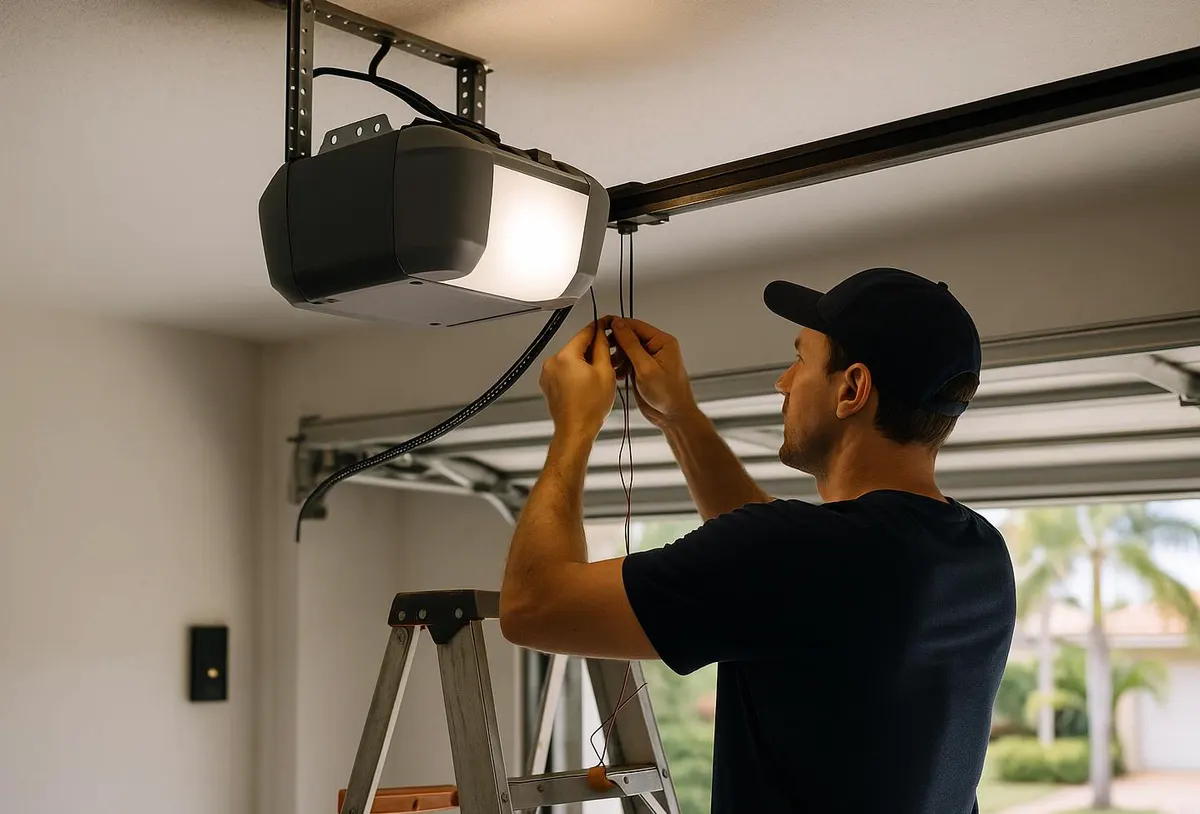
Winterizing Your Garage Door Before Norfolk's Freeze-Thaw Season
Rule of thumb: if your garage door opens and closes smoothly, quietly, and without hesitation right now, it will probably make it through winter fine with just a lubrication and seal check. The exceptions are doors that are more than eight or ten years old, doors with wood panels, doors on homes close to the water, and any door that's already making noise or feels heavy to lift by hand — those need a closer look before the first hard freeze and the next round of coastal storms.
Why Hampton Roads winters are harder on garage doors than they look
Norfolk doesn't get brutal, sustained cold, but it gets something arguably tougher on hardware: repeated freeze-thaw cycles, wind-driven rain, and salty, humid air that never fully dries out. Moisture gets into tracks and hinges, then a cold snap locks it in place as ice or turns it into grit that grinds down rollers. None of this is dramatic on its own, but it adds up over a season and shows up as a door that groans, sticks, or drifts off its track by spring.
1. Lubricate the moving parts — but use the right product
Hinges, rollers, springs, and the track itself should get a light coating of a silicone-based or lithium-based garage door lubricant before temperatures start dropping regularly. Skip WD-40 for this job; it's a solvent and degreaser, not a long-term lubricant, and it can actually wash away the grease that's already protecting the springs. A quick pass with a proper lubricant takes about ten minutes and prevents the stiff, jerky movement that's common on cold mornings.
2. Check and replace weatherstripping
The rubber seal along the bottom of the door and the vinyl stripping along the sides and top are your main defense against wind-driven rain and cold air. Look for cracking, flattening, or gaps where daylight shows through. On older homes especially, these seals degrade faster than people expect because they're exposed to direct sun in summer and then stiffen in winter cold. Replacing a worn bottom seal is inexpensive and straightforward, and it's one of the most effective ways to keep standing water and blowing rain from pooling at the base of the door during a coastal storm.
3. Test the balance, not just the opener
Disconnect the opener (pull the emergency release cord) and lift the door halfway by hand. A properly balanced door will stay in place on its own. If it drops or shoots upward, the springs are compensating incorrectly for the door's weight, and that imbalance gets worse as cold weather adds resistance to every other moving part. This is a two-minute test, but it's one most homeowners never think to run until something breaks.
4. Inspect springs and hardware for rust
Humid summers followed by damp, salty winters are rough on exposed metal. Check springs, the track, and all visible bolts for surface rust or pitting. A little surface rust on the track can usually be wiped down and treated, but springs that show rust or visible wear are a different story — a spring that fails in cold weather tends to snap rather than stretch, and it often happens without warning. If you notice gaps between coils, flattening, or rust concentrated at one spot, that's worth having inspected before winter rather than after it fails on a 30-degree morning.
5. Look closely if you have a wood or older door
Homes with older wood garage doors need extra attention this time of year. Repeated wetting and drying cycles cause wood to swell, crack, and eventually rot at the bottom edge where it sits closest to standing water. If the paint or sealant is chipped, moisture gets in, freezes, and expands the damage. A fresh coat of exterior sealant before the wet season settles in is cheap insurance against a much bigger repair later.
6. Check the opener's sensors and auto-reverse
The photo-eye sensors near the bottom of the track can drift out of alignment from everyday vibration, and cold, damp air makes this more noticeable because moisture or condensation on the lenses can block the beam. Wipe the sensors clean and confirm the door reverses properly when something breaks the beam. This is a basic safety check that takes thirty seconds and matters more in winter, when people are less likely to double-check the door visually before walking under it.
7. Tighten hardware after the first few cold snaps
Temperature swings cause metal to expand and contract, which gradually loosens bolts on the track brackets and hinges. After the first stretch of cold mornings, walk the door and give everything a visual check, tightening anything that's working loose. This is especially common on newer steel doors with insulated panels, where the hardware sees more stress from thermal movement than people expect.
When to Call Norfolk Garage Door
If the balance test fails, if you see rust or gaps in the springs, or if the door is sticking, grinding, or reversing unpredictably, it's time to call in a professional rather than keep adjusting it yourself. Our garage door maintenance visits cover exactly this kind of pre-winter tune-up — lubrication, hardware tightening, track alignment, and a full safety check on the opener. If a spring looks worn or the door is unbalanced, our spring replacement service handles that safely, which matters because springs under tension are genuinely dangerous to work on without the right tools.
If your garage door needs attention before the cold weather settles in, call Norfolk Garage Door today. We serve homeowners and businesses throughout Norfolk, VA and the surrounding Hampton Roads area, and we're ready to get your door winter-ready before the next freeze.